0 概述
使用的标准方法
1
2
3
4
| @ServletComponentScan(basePackages = "com.atguigu.admin") :指定原生Servlet组件都放在那里
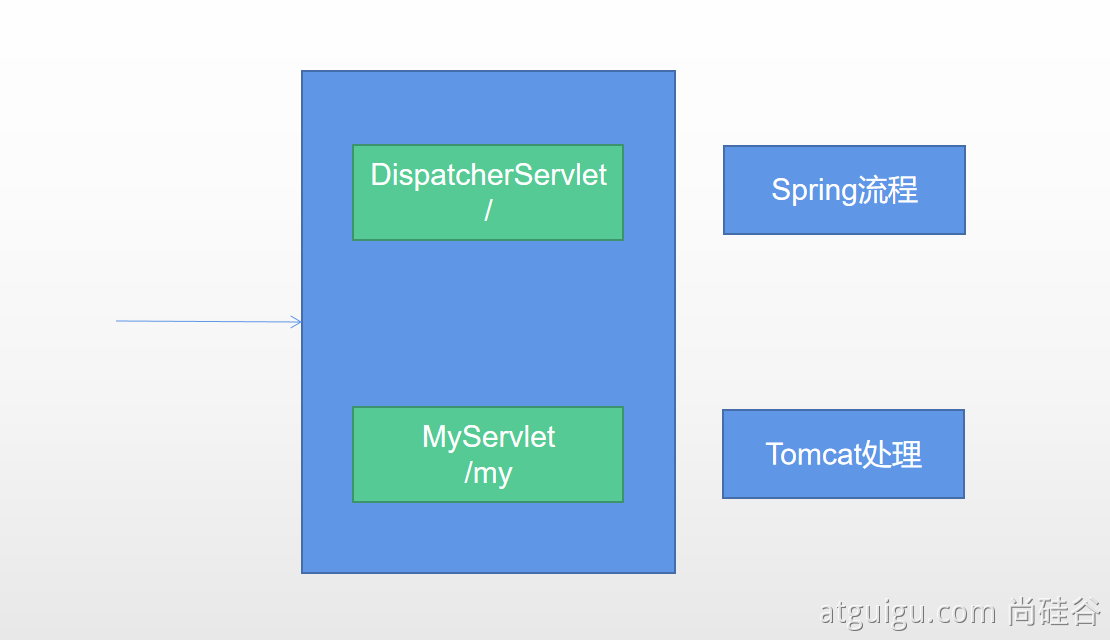
@WebServlet(urlPatterns = "/my"):效果:直接响应,没有经过Spring的拦截器?
@WebFilter(urlPatterns={"/css/*","/images/*"})
@WebListener
|
WebServlet
1
2
3
4
5
6
7
8
9
10
11
| @WebServlet(urlPatterns = "/path2/*")
public class MyServlet extends HttpServlet {
@Override
protected void doGet (HttpServletRequest req, HttpServletResponse resp)
throws ServletException, IOException {
PrintWriter writer = resp.getWriter();
writer.println("response from servlet ");
}
}
|
WebFilter
1
2
3
4
5
6
7
8
9
10
11
12
13
14
15
16
17
18
19
20
21
22
23
| @WebFilter(urlPatterns = "/*")
public class MyFilter implements Filter{
@Override
public void init (FilterConfig filterConfig) throws ServletException {
}
@Override
public void doFilter (ServletRequest request,
ServletResponse response, FilterChain chain)
throws IOException, ServletException {
String url = request instanceof HttpServletRequest ?
((HttpServletRequest) request).getRequestURL().toString() : "N/A";
System.out.println("from filter, processing url: "+url);
chain.doFilter(request, response);
}
@Override
public void destroy () {
}
}
|
WebListener
1
2
3
4
5
6
7
8
9
10
11
12
13
14
15
| @WebListener
public class MyServletListener implements ServletContextListener{
@Override
public void contextInitialized (ServletContextEvent sce) {
System.out.println("from ServletContextListener: " +
" context initialized");
}
@Override
public void contextDestroyed (ServletContextEvent sce) {
}
}
|
DispatcherServlet
DispatchServlet 如何注册进来
● 容器中自动配置了 DispatcherServlet 属性绑定到 WebMvcProperties;对应的配置文件配置项是 spring.mvc。
● 通过 ServletRegistrationBean 把 DispatcherServlet 配置进来。
● 默认映射的是 / 路径。
使用RegistrationBean
ServletRegistrationBean, FilterRegistrationBean, and ServletListenerRegistrationBean
1
2
3
4
5
6
7
8
9
10
11
12
13
14
15
16
17
18
19
20
21
22
23
24
25
26
27
| @Configuration
public class MyRegistConfig {
@Bean
public ServletRegistrationBean myServlet(){
MyServlet myServlet = new MyServlet();
return new ServletRegistrationBean(myServlet,"/my","/my02");
}
@Bean
public FilterRegistrationBean myFilter(){
MyFilter myFilter = new MyFilter();
FilterRegistrationBean filterRegistrationBean = new FilterRegistrationBean(myFilter);
filterRegistrationBean.setUrlPatterns(Arrays.asList("/my","/css/*"));
return filterRegistrationBean;
}
@Bean
public ServletListenerRegistrationBean myListener(){
MySwervletContextListener mySwervletContextListener = new MySwervletContextListener();
return new ServletListenerRegistrationBean(mySwervletContextListener);
}
}
|
2 嵌入式Servlet容器
方法
● 默认支持的webServer
○ Tomcat, Jetty, or Undertow
○ ServletWebServerApplicationContext 容器启动寻找ServletWebServerFactory 并引导创建服务器
● 切换服务器
1
2
3
4
5
6
7
8
9
10
| <dependency>
<groupId>org.springframework.boot</groupId>
<artifactId>spring-boot-starter-web</artifactId>
<exclusions>
<exclusion>
<groupId>org.springframework.boot</groupId>
<artifactId>spring-boot-starter-tomcat</artifactId>
</exclusion>
</exclusions>
</dependency>
|
原理
- SpringBoot应用启动发现当前是Web应用。web场景包-导入tomcat
- web应用会创建一个web版的ioc容器 ServletWebServerApplicationContext
- ServletWebServerApplicationContext 启动的时候寻找 ServletWebServerFactory(Servlet 的web服务器工厂—> Servlet 的web服务器)
- SpringBoot底层默认有很多的WebServer工厂;TomcatServletWebServerFactory, JettyServletWebServerFactory, or UndertowServletWebServerFactory
- 底层直接会有一个自动配置类。ServletWebServerFactoryAutoConfiguration
- ServletWebServerFactoryAutoConfiguration导入了ServletWebServerFactoryConfiguration(配置类)
- ServletWebServerFactoryConfiguration 配置类 根据动态判断系统中到底导入了那个Web服务器的包。(默认是web-starter导入tomcat包),容器中就有 TomcatServletWebServerFactory
- TomcatServletWebServerFactory 创建出Tomcat服务器并启动;TomcatWebServer 的构造器拥有初始化方法initialize—this.tomcat.start();
- 内嵌服务器,就是手动把启动服务器的代码调用(tomcat核心jar包存在)
3 定制Servlet容器
● 实现 WebServerFactoryCustomizer
○ 把配置文件的值和ServletWebServerFactory 进行绑定
● 修改配置文件 server.xxx
● 直接自定义 ConfigurableServletWebServerFactory
xxxxxCustomizer:定制化器,可以改变xxxx的默认规则
1
2
3
4
5
6
7
8
9
10
11
12
13
| import org.springframework.boot.web.server.WebServerFactoryCustomizer;
import org.springframework.boot.web.servlet.server.ConfigurableServletWebServerFactory;
import org.springframework.stereotype.Component;
@Component
public class CustomizationBean implements WebServerFactoryCustomizer<ConfigurableServletWebServerFactory> {
@Override
public void customize(ConfigurableServletWebServerFactory server) {
server.setPort(9000);
}
}
|
定制化的常见方式
多级定制化方式
● 修改配置文件;
● xxxxxCustomizer;
● 编写自定义的配置类 xxxConfiguration;+ @Bean替换、增加容器中默认组件;视图解析器
● Web应用 编写一个配置类实现 WebMvcConfigurer 即可定制化web功能;+ @Bean给容器中再扩展一些组件
1
2
| @Configuration
public class AdminWebConfig implements WebMvcConfigurer
|
● @EnableWebMvc + WebMvcConfigurer —— @Bean 可以全面接管SpringMVC,所有规则全部自己重新配置; 实现定制和扩展功能
○ 原理
○ 1、WebMvcAutoConfiguration 默认的SpringMVC的自动配置功能类。静态资源、欢迎页…..
○ 2、一旦使用 @EnableWebMvc 、。会 @Import(DelegatingWebMvcConfiguration.class)
○ 3、DelegatingWebMvcConfiguration 的 作用,只保证SpringMVC最基本的使用
■ 把所有系统中的 WebMvcConfigurer 拿过来。所有功能的定制都是这些 WebMvcConfigurer 合起来一起生效
■ 自动配置了一些非常底层的组件。RequestMappingHandlerMapping、这些组件依赖的组件都是从容器中获取
■ public class DelegatingWebMvcConfiguration extends WebMvcConfigurationSupport
○ 4、WebMvcAutoConfiguration 里面的配置要能生效 必须 @ConditionalOnMissingBean(WebMvcConfigurationSupport.class)
○ 5、@EnableWebMvc 导致了 WebMvcAutoConfiguration 没有生效。